Category Archives: Wildlife

Cape York – Day 2 – Revisited

This morning we leave Haggerstone Island, then see downed aircraft, crocs up and close, Captain Billy Goat Waterfall and finally we land near a WW2 wreck of a P39 Aircobra which crashed on its way to Papua New Guinea.  Flying up the coast we see bauxite deposits, sands, rivers and finally hover over the tip of Australia. Then an aerial trip around the Torres Strait, we did not land as you can wait for hours before customs turn up (they work on Island time). Last stop Punsand Bay Campgrounds to stay.

Day 2 was as stunning as Day 1 – Revisited here.

Click on an image to a slideshow. Enjoy. Viva Cristo Rey.

Morning

Northern Cape York – eastern side

The Tip and Torres Strait

Punsand Bay after sunset

DXO Photolab 9 images

The Doc has been trialing DXO Photolab 9. The results have been excellent and the program is easy to use (very much like Capture One). The Doc may need to change programs after Capture One went to a monthly/yearly subscription model. The Doc refuses to use subscription models.

Plus, it looks like Affinity Photo may also shift to a subscription model shortly. So The Doc needs to prepare for that as well.

Here are some test photos done in DXO Photolab 9. Click on any image to see the full size.

Viva Cristo Rey.

Corroboree Billabong – the Sony A9III in the field

The Doc took the Sony A9III out into the field for its first use. A few test photos on the ground at Bullo River Station, but the first proper test was the helicopter trip around the property. Report coming, with images, in due course.

With any new camera there is learning curve concerning how to best set it up and use it. A few mistakes were made and a few images lost, but no disaster. The Doc was worried at setting the frames per second (fps) too low in the helicopter, but the culling of images showed that not to be the case.

The camera can go up to 120 fps in High Plus speed mode. 120 fps was not used on the helicopter, but it was on the Corroboree Billabong cruise, when The Doc had limited time to get images, including the old saltwater crocodile. The camera was amazing and this feature will come in useful for action shots. You must use it sparingly and cull images cull images, hard.

Having visited Corroboree Billabong before with Wetland Cruises, The Doc knew it would be a good day trip out of Darwin. Corroboree Billabong has the highest concentration of crocs in the world. It has both fresh water and salt water crocodiles. Corroboree Billabong is located on the Mary River floodplain.

The landscape images were being taken by the Sony P&S, not the A9III, as the A9III was fitted with a 135mm lens.

The harsh light in the middle of the day meant no brilliant images from the billabong.

The roadtrains and billabong images first, followed by the crocs close ups.

Now the croc images. The croc was getting close to 5 metres in length, so very dangerous to the stupid and unwary.

Priestly Spiny Orbweaver – Outback Queensland

After leaving Eromanga the first overnight stop was St George at the Balonne Inn. The Doc stayed there two nights and went to visit Alton National Park for a day visit. While there he photographed an unknown spider. The Doc has finally identified it as a Priestly Spiny Orbweaver (Gasteracantha sacerdotalis). This sighting is over 400 kilometers west of any other sighting of this species, as most sightings are along the Queensland Coast.

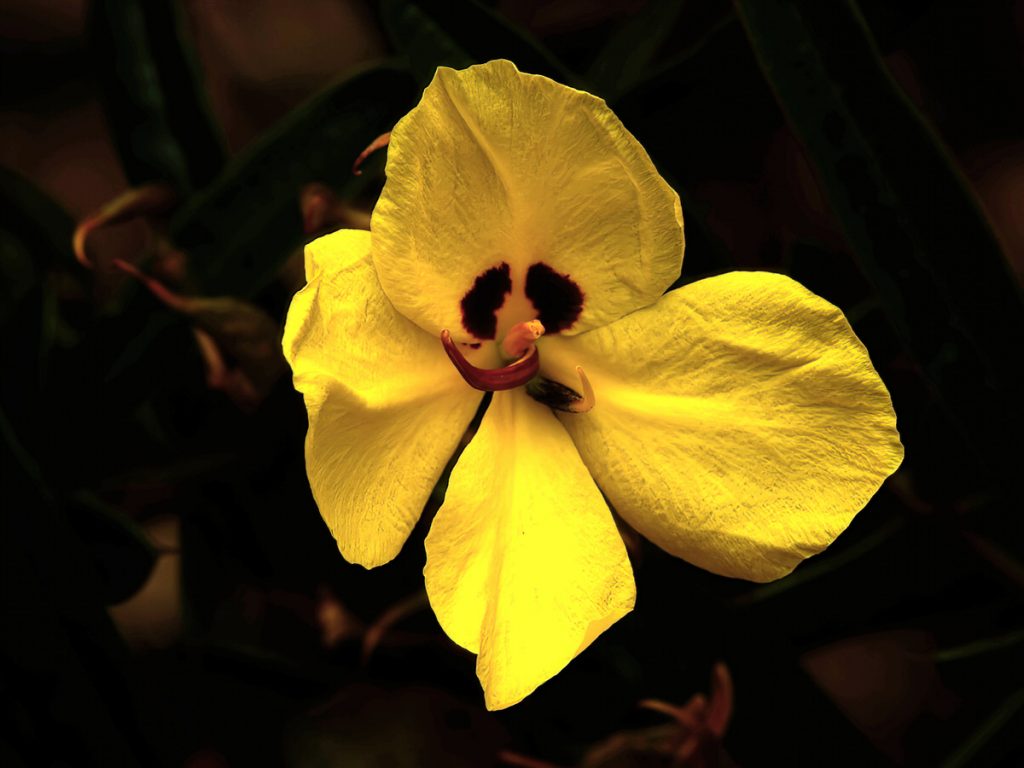
Labichea lanceolata subsp brevifolia – flowers

A plant from south west WA, with a resident spider, but the spider is presumably from western Sydney as it was growing at the Mt Annan Botanic Gardens. The spider’s adaptations suited life on this species. The colour and shape of its legs closely matched the shape and colour of the stamens and new growth areas on the plant. Look at centre top of the frame, where the legs are similar in colour to new growth. The shape of the front legs look a lot like the shape and colour of the stamens (other posted images show the stamens better). Without knowing more about the spider species, perhaps the spider usually lives on an Eastern Australian flower that shares the same colour (yellow being common) and a similar flower shape. Even the dark colour at flower centre, is roughly the same shape as the spider’s abdomen!

EDIT: the spider comes from a family commonly called crab spiders or flower crab spiders.

Pacific black duck

Look carefully and you can see a duck attacking the one taking off, you can just see the top of its head. Tevan Swamp, Ballina, Northern NSW.