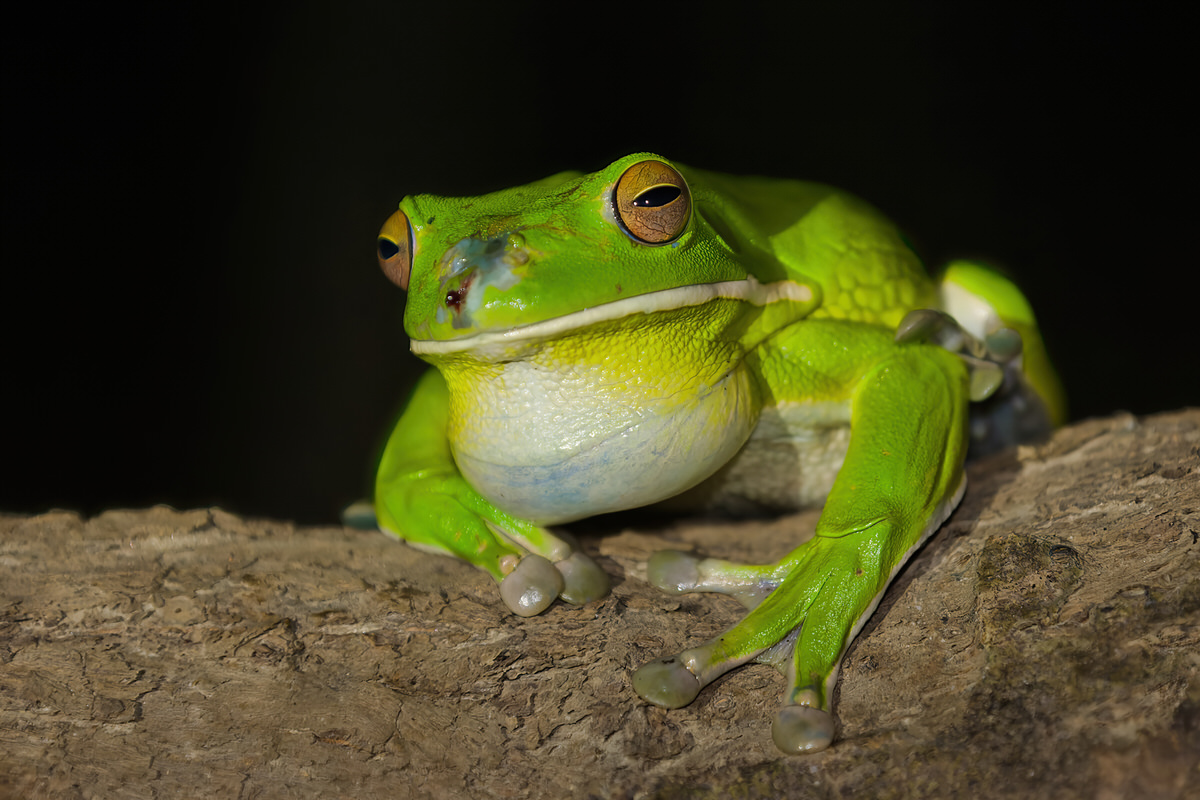
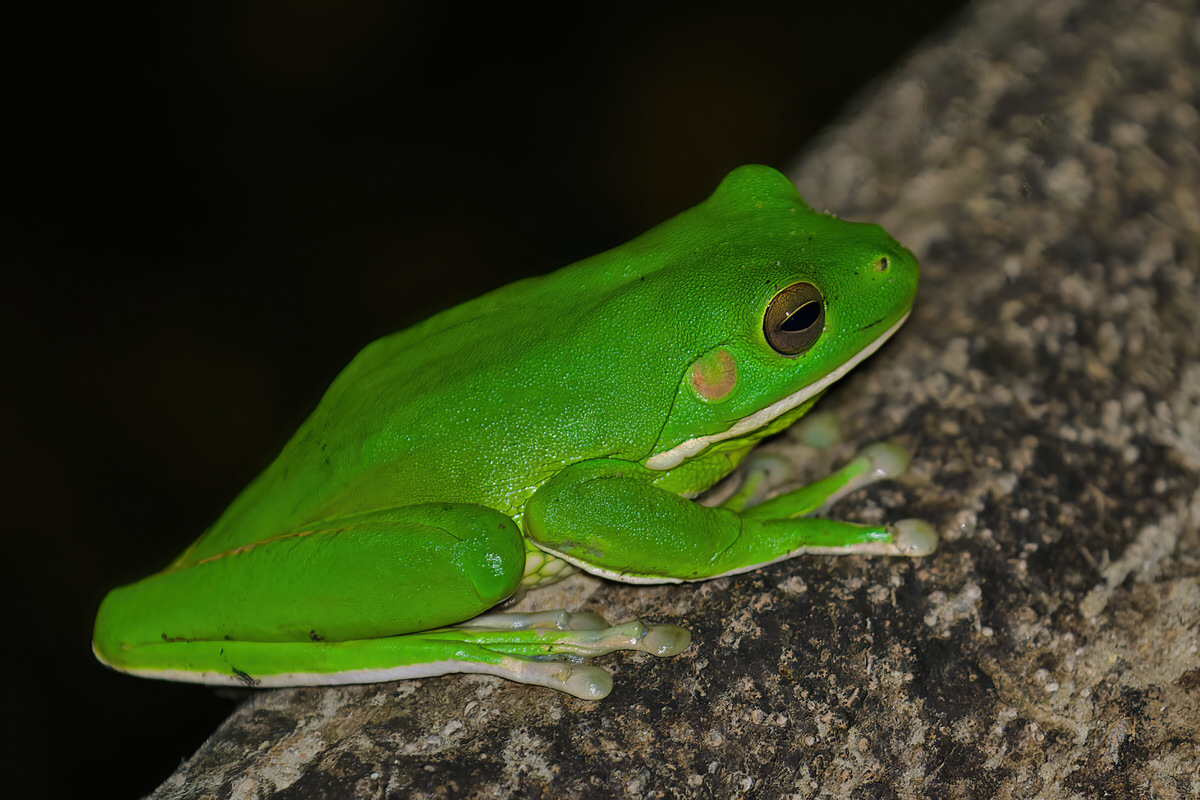
The Doc is still making his way through images from the Excellent Adventure. This time we visit AWC’s Piccaninny Plains Station (Ranch) up in Cape York. These are giant tree frogs from our night wildlife spotting. It is the biggest species of tree frog in the world (shared with a frog from Cuba). Click to see full size image.
Also known as an albino echidna because of its lighter colour. The other name is pale-coloured echidna which is more accurate, as it is much lighter in colour than the mainland echidna.
The Doc has been posting about the various colours in barks, leaves and flowers. However, the absence of colour has also been revealed. One bark, that of Corypha utan (Gebang Palm), is the most boring and colourless of any The Doc has photographed. The outside of the tree is just shades of grey from dark to light grey, with almost zero colour. No The Doc did not desaturate the image, even if it looks like it.
The Kangaroo Island Tamar Wallaby or Notamacropus eugeniidecres. Kangaroo Island is full of wildlife, which took a beating in the recent bushfires. The Doc visited for three weeks in 2014, about 8 years after the last big fire (full report here). Roadkill was plentiful as the wildlife was abundant. Click on image to see full size. Viva Cristo Ray.
The healthiest looking Dingo The Doc has seen in the bush, feeding off the rubbish dump at Innaminka in Outback South Australia. You can see rubbish in the background. Click on image to see full size.
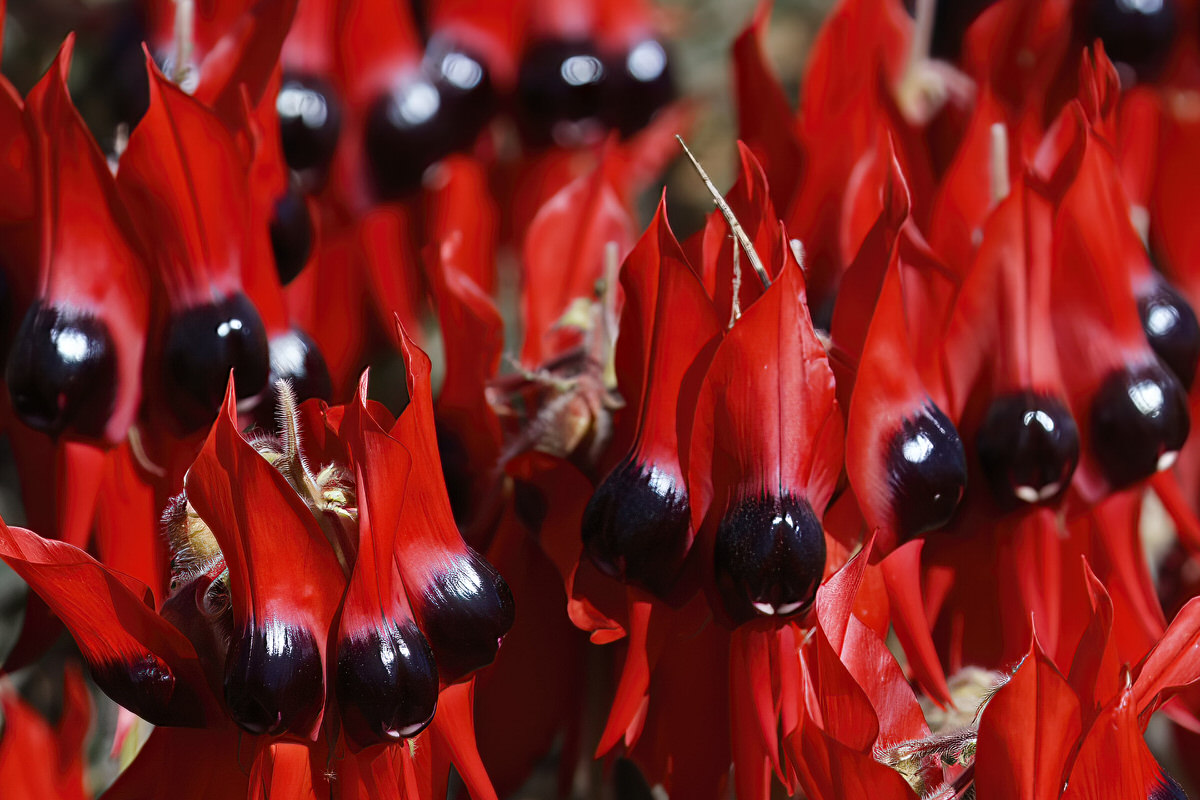
Commonly known as the Sturt Desert Pea, floral emblem of South Australia. The dark eye version is from South Australia, the lighter coloured eye is the northern or WA form found in the Northern Territory and WA.
It is known by some other names as well including: Swainsona formosa, Showy Donia (G. Don 1832), Beautiful Donia (G. Don 1832), Dampier’s clianth (Veitch 1850), Dampier’s Clianthus (Hooker 1858), Sturt’s pea (Adelaide Advertiser 1858), Sturt pea (de Mole 1861), Captain Sturt’s desert pea (Aspinall 1862), Desert pea (Anon 1864), Sturt’s desert pea (Tenison-Woods 1865), Glory flower (Bailey 1883), Glory pea (Bailey 1883), Sturt’s glory pea (Anon 1886), Lobster claws (The Garden 1890), Blood flower (Parker 1898), Dampier’s glory pea (Guilfoyle 1911), Australian glory pea (Guilfoyle 1911), Dampier pea (Harris 1980).
Working through some images during lockdown. Some rare photos of the endangered Bridled Nail Tail Wallaby from AWC’s Scotia Sanctuary. Click on the image to see full size.
The other revelation of the colour palettes has been leaves green leaves using transmitted light. We normally look at leaves in reflected light, but transmitted light is when the light source shines through the leaf. Your reaction is to think they are just shades of green, but they are much more complex than that.
On my walk yesterday The Doc picked up some eucalyptus leaves which he identified as Eucalyptus baueriana, or Blue Box. The Doc found an immature leaf and a mature leaf and photographed both.
Here is the immature leaf, a fairly consistent green.
Juvenile leaves disjunct, orbiculate, dull green.
The palette reveals it is more complex 154 core colours!
The mature leaf has core colour palette with 254 colours, 100 more!
The Doc then took both images and looked at the combined colour palette from both, it was 242 colours. While there is an overlap in the colours, the various palettes demonstrate that the leaf over it life varies in colour. More than what we first think. The Doc noticed this in barks as well and it is obvious over the life of flower.
Creating the colour palettes for the barks, flowers and leaves has been an eye opener. Take Banksia blechnifolia, which The Doc thought was a fairly bland flower, at least as Banksias go. Here is the image:
At first glance it suggests a bland colour palette, until you analyse the palette. Here are the ten most dominant colours including Rose Gold, Big Dip O’Ruby and Turkish Rose:
Further analysis shows 178,775 total colours, comprising 179 core colours. And The Doc was thinking there was two main colours, white and rose-pink.
The Doc has been busy over the past couple of weeks processing bark images from Lismore Botanic Gardens plus some from the archives, over 300 images. A small sample from the colourful Corymbia family. Click on images to see them at at full size.




You must be logged in to post a comment.