Category Archives: guide

Insulated crimp terminals – update

Types
Since The Doc is struggling to travel, he is doing more research on insulated crimp terminals.

There are 3 broad types of insulated crimp terminals, including:

  • Vinyl style, which are often partially insulated;
  • Nylon style, which can be fully insulated when they are a blade shape. So, when the male and female parts are mated, all the metal parts are covered with Nylon. Nylon is a premium quality insulation material resistant to petrol, hydraulic fluids and oil; and
  • Heatshrink. As the name suggests after you crimp the terminal, you then use a heat gun to heat shrink the insulation onto the terminal and wire. Heatshrink terminals have good dielectric strength (it is a good insulator) and gives a hermetic seal (preventing dust and water ingress). Often used in marine environments or under a car’s bonnet.

The three styles can be plugged into each other, if they are the same size.

Heat shrink terminals are the most expensive to buy, around AUD1.00 each verse AUD36 cents for a vinyl crimp (June 2026).

Tip: do not try and heat shrink a nylon or vinyl covered insulated terminal; they will melt.

Metal type
The better-quality terminals are tin-plated copper. Cheaper terminals, with lower electrical conductivity, are tin-plated brass.

Cheaper terminals are tin-plated brass. Tin-plated copper terminals seem to come in three broad categories; first those sold on eBay, Amazon and Autoparts stores which are often quite thin and more likely to deform when crimped.

Second automotive grade terminals from bigger name companies like NARVA or IONNIC (who sell even better quality terminals than NARVA).

Lastly, military grade terminals which are expensive to buy, but are of a very high quality. These terminals have more copper and a thicker tin plating.

Features
Besides being made of tin-plated copper, better quality crimps can also have some or all of these features:

  • terminal sizing is stamped onto the terminal. Two sizes can be stamped, the wire gauge in AWG (or metric) and the terminal sizing (e.g. the size of the ring terminal opening). All the IONNIC terminals I have seen were stamped and most of the NARVA terminals too;
  • a bell housing/bell mouth where the wire is inserted. The bell mouth helps accommodate the fine wire strands, which can splay out after stripping. The bell mouth makes wire insertion easier. Sometimes the bell mouth is formed by the insulation, with others it is part of the metal terminal, like IONNIC Double Crimped terminals;
  • in the middle of butt splice terminals, the terminal has been pressed to stop the wire going past the halfway point, as these butt splices are crimped on both sides to join the two wires;
  • on NARVA terminals, but not IONNIC, there is a stop point pressed into the terminal preventing you from inserting the wire too far before crimping (The Doc means terminals other than butt splices). Good practice is to allow 1 to 2mm of copper wire to protrude through the terminal before crimping;
  • with heatshrink terminals the insulation is longer, so when heat is applied, the heatshrink covers part of the wire to secure a waterproof connection. With nylon and vinyl style terminals you can use a single wall heatshrink tubing it needed. The Doc chooses to use only single wall tubing on nylon and vinyl style terminals, but you could use a dual wall tubing; and
  • occasionally a terminal will have an additional tin-plated copper sleeve at the wire insertion end, called a double crimp. INONIC terminals made like this are labelled “Double Crimp”.

Terminal sizes
Automotive terminals commonly come in three sizes red (AWG22-16 or 0.5-1.5mm2), blue (AWG16-14 or 1.5-2.5mm2) and yellow (AWG12-10 or 2.5-6mm2). Or small (red), medium (blue) and large (yellow). AWG stands for American Wire Gauge and the second figure is the metric sizing.

A better-quality terminal means a better crimp, less resistance, less heat and better conductivity.

The Doc’s Guide to terminal crimping is here.

Cheap Battery Monitors

Introduction
A summary of cheap battery monitors owners can use on their cars or battery boxes.

The original comparison is here (BM2 BLE, Kickass (who now re-badge an AncelBM200) and CTEK).

BM2 BLE (2 models)
The BM2 BLE Battery Monitor works with AGM, Flooded, Gel and Lead-Acid batteries.

A second model works with Lithium batteries (LiFePO4), but it looks the same as the base unit. Only the package labelling tells you which is which. Once out of the packaging both units look identical.

The BLE is widely sold under other names.

Software

The BM2 BLE comes with free software which can monitor 1 battery at once. You can buy third party software which will monitor up to 4 BM2 BLE monitors at once using the Multi-Batt Mon app (iOS only).

Other features

When installed on a car battery, the BLE can also perform a cranking test, an alternator charging test and keep a summary of trips taken.

Data storage

The device stores 30 days of data.

ANCEL BM200 (2 models)
The Ancel BM200 for Lithium Lead-Acid Batteries, including Flooded, AGM, GEL, EFB and LiFePO4.

One BM200 model works with the Ancel BM200 app.

The other model has an almost identical sensor paired with a head unit. However, the sensor has 5 “State of Health” LEDs across the sensor. Ranking the battery’s State of Health from REPLACE to GOOD, mirroring what you see on the head unit screen.

The app BM200 model does NOT work with the monitor with the paired head unit.

Software

The free app model can monitor up to 4 batteries at once.

The second BM200 model only works with the supplied head unit.

Other features

When installed on a car battery, the Ancel BM200 can also perform a cranking test, an alternator charging test and keep a summary of trips taken.

Data storage

The device stores 30 days of data.

ANCEL BM300 and BM300 PRO
There are two models, the Ancel BM300 works with flooded, AGM, Gel and EFB battery types, but NOT lithium.

The Ancel BM300 Pro works with flooded, AGM, Gel, EFB battery types and Lithium batteries. The BM300 Pro supports 6V / 12V / 24V systems.

The BM300 unit is psychically larger than both the Ancel BM200 and BM2 BLE battery monitors.

Ancel claims the BM300 Pro delivers over 99.6% accuracy. The Doc has one under going testing now on a battery box.

Software

The free software can monitor up to 4 batteries at once.

Other features

When installed on a car battery, the Ancel BM300 Pro graphs voltage, state of charge and battery temperature over time. It also has a find your car function and a cranking test.

Data storage

The device stores 72 days of data. The longest time of the models listed here.

SUMMARY
Any of these units do a decent job, acknowledging they are not precise but give a reasonable approximation of the state of charge and overall health of the battery.

The most useful feature, in The Doc’s opinion, is the app’s graphing function which reveals a great deal about the battery and the devices drawing power from it.

GrenX Accessory Rail

In preparation for the Kimberley trip (hopefully) later this year.

Working from the right side of the GrenX Rail, The Doc a GME UHF Mic holder on the angle side. He can move the UHF hand-piece across from the passenger side holder, when offroad.

The Doc dissembled the GME Mic Holder (Model MB207), drilled a hole in the back plate, inserted a stainless steel 1/4 inch 20 UNC bolt through the hole, reassembled the Mic holder. He put double sided tape on the back and then screwed the ¼ inch 20UNC bolt into the GrenX Rail. The allen key was inserted through the opening in the GME Mic Holder. The idea was from Rohan at @GrenX. The Doc did buy 1/2 20UNC bolts but they did not fit into the Mic Mount. The 1/4 bolts fitted perfectly.

Next is the Garmin GPS Tracker.

Far left is the holder for the caravan reversing camera screen, not currently mounted. This reversing camera and the Garmin use RAM Mounts.

Pictures below show the Mic piece moved from the passenger side holder to driver’s side holder.


Grenadier build – 20 inch lightbar details

WHAT YOU NEED

  1. STEDI Hex brackets (choose size 48 to 53mm). The STEDI hex bracket came with a Torx Security key to tighten the bolts in the hex bracket. Not sure of the size because I could not get my Torx Security bits to fit properly. The brackets come with three M6 bolts of different sizes and types. One pair was the correct length to use in my setup. The Doc also used a Nord Lock washer and a flat washer on the M6 bolt. The Nord Lock washer ensures corrugations do not loosen the bolts.
  2. Lightforce Viper 20-inch lightbar (single or double row of LEDs). The Viper comes with side mount and slide brackets.
  3. Two standard M6 nuts. Only a standard M6 nut fitted into the hex bracket slot, a M6 Nylon Lock Nut was too thick. The hex bracket only came with Nylon Lock Nuts. See also point 1 below under FITTING.
  4. Relay, tools and wiring.
  5. The Viper had a 2 pin Deutsch DT plug attached and a wiring loom. The power came from the Grenadier’s 10 amp wire ends under the bonnet. The auto electrician changed the loom and added a relay and integrated it into the car. The Doc never saw the modified loom. The relay turns on the lights when it senses current to the high beam on your spotlights (which only work when the highbeams are on).

Laws in News South Wales and WA require lightbars to be fitted to the underside of the Roo Bar hoop, not above it. You have much more flexibility if you can mount it above the Roo Boo, but at increased risk to pedestrians.

FITTING

  1. Affix with the Lightforce slide mounts that attach to the rear of the lightbar (not the ends which use brackets – the Ligthtforce comes with both options supplied) You need to reverse the way the bolts normally insert into the hex bracket. You may need to trim the bolt’s length so it does not protrude pass the width of the bracket onto the Roo Bar. Adding two washers on the M6 bolt was enough so the bolt did not protrude, in my case. The Doc used a Nord Locker washer, flat washer and a standard M6 nut.
  2. Affix the slide brackets to the bottom half of both hex brackets. The nut must go inside the hex bracket slot, not the bolt head as normal. The image below of the slide bracket shows the correct orientation for inserting the bolt into the hex bracket.
  3. Attach the slide brackets to the lightbar. Tighten bolts onto the slide brackets, after spacing them correctly (The Doc placed then 100mm in from each end of the lightbar). Just hand tighten the bolts and check the angle of the lightbar fitted under the Roo Bar, adjust position of slide brackets if needed. You do have some additional adjustment with the way you affix the hex bracket to the Roo Bar.
  4. Attach hex brackets to the Roo Bar, check it is centered correctly. Tighten all 8 bolts in the hex brackets. TIP: when tightening the Torx Security bolts on the hex bracket, The Doc would tighten a bolt two turns and then go around and do the same to all the bolts. If you tighten one bolt too much, it can result in another becoming loose. The described approach minimised that effect.
  5. Wire up the lightbar or call ORS (Sydney based) and have then do it for you.

The Single Row Viper Lightbar lines up nicely with the grille cross support to minimise disruption to the air flow.

ANOTHER OPTION: If you do not have a winch, fitting the 20-inch Viper down on the bumper would be another option. Or if you do have a winch, be very careful about drilling holes in the bumper. The end brackets could be used for mounting in this position.

Grenadier build – fuel tanks

XSPEC Molle panels with diesel fuel tanks installed today. One on each side. XHQ also solved the electrical problem, fixed it and found a new wiring issue with the recent 20 inch LED lightbar install (glad The Doc asked them to look the lightbar over). It was a quick fix.

The electrical problem was caused when the dashcam was installed by my installer. It did not affect the dashcam but a fuse for the Power ON switch on the roof panel. Now all fixed. That explains why the all aux power circuits where down, the ON switch was not working, due to the blown fuse.

Everything now working as it should. Final niggles gone.

You can also see the JOOCLA Ensuite mounted on the driver’s side of the car, above the diesel tank.

Grenadier build – more build details

Things done recently:

1. The Doc and his brother installed the rear roof shelf over the weekend and The Doc has been experimenting how to pack the shelf. At present, he is using it to store the Solar Screens, air compressor equipment, Nakatanenga rear Door Air Vents and the Blacksmith Camping firewood carrier. Minimal loss of rear vision due to the shelf.

Here is a photo – the Travel Buddy Oven will be installed on the left side under the shelf after The Doc fits the Anderson plug to the oven.

2. The bed extension is removed while ORS makes some refinements to the design. It did allow me to easily fit the BLE Battery Monitor to the main battery today.

3. The Bushman Fridge arrived for the Grenadier and The Doc gave the courier a guided tour of the car. 🙂

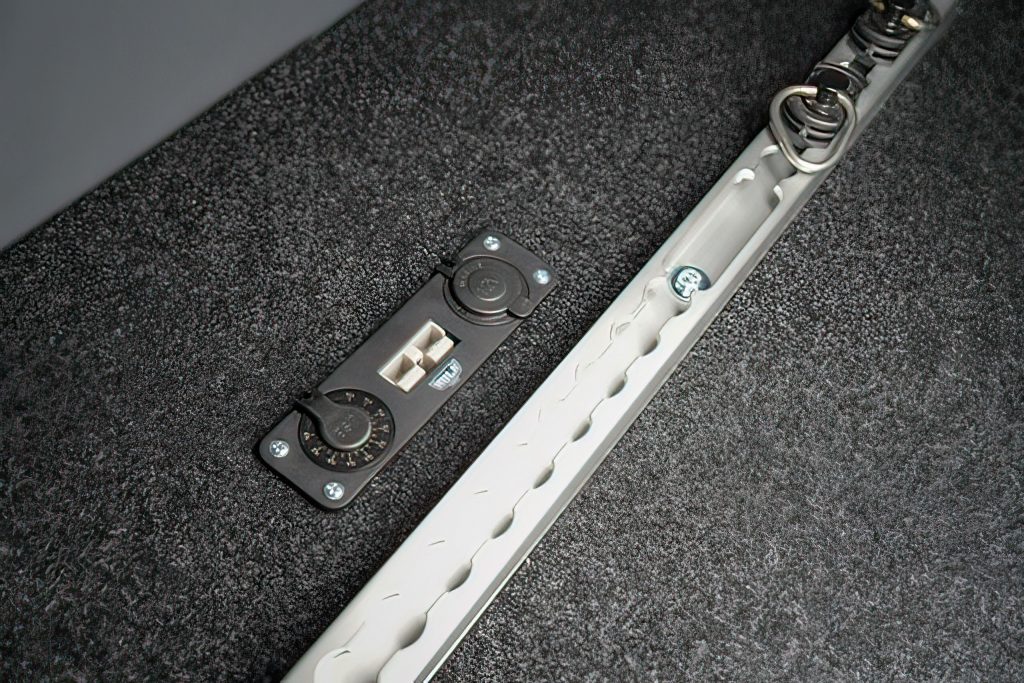
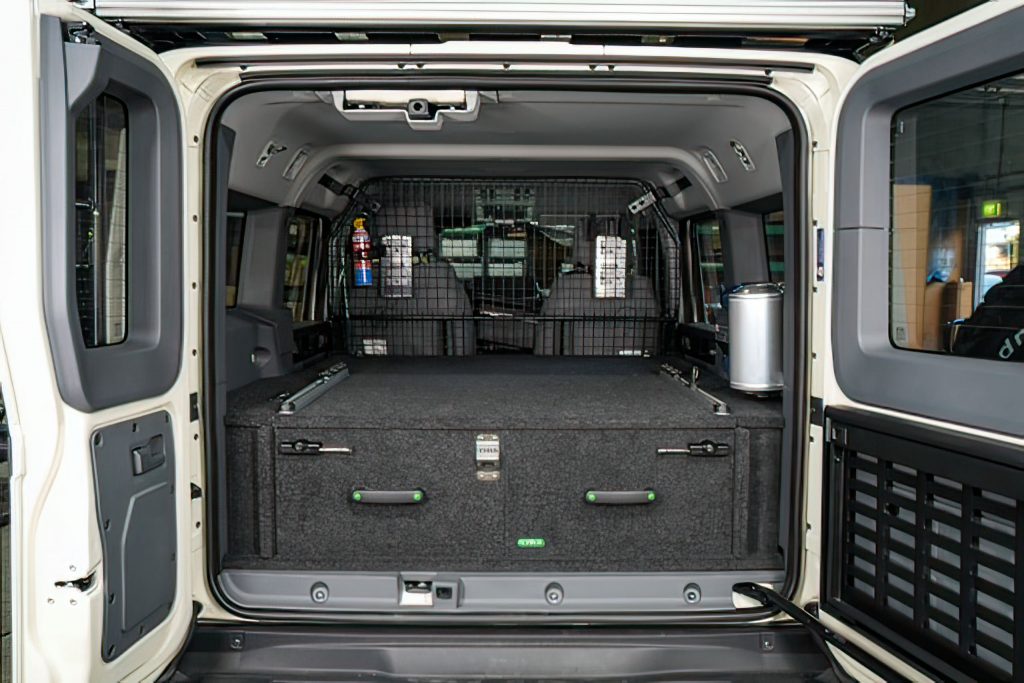
4. The Doc installed the rear Firestryker extinguisher next to the air compressor cylinder. Brian from ORS suggested the location; and I thought it was a good suggestion, so I used it. You can see the air compressor bracket created a little space between it and the window that I can use for storage. Still working out what to put there. In the image there is a red Drifta Power Towel Dispenser and the other canvas bag has a 240 volt extension cable. When camping I can hang the Drifta towel dispenser from the roof shelf. That worked out nicely! Finally, the tie down rings will be re-installed where you see the bolt and washer on the bracket, so I can use the raised tie down points on both sides of the car.

Image from Drifta website.

Grenadier build – ORS fitout

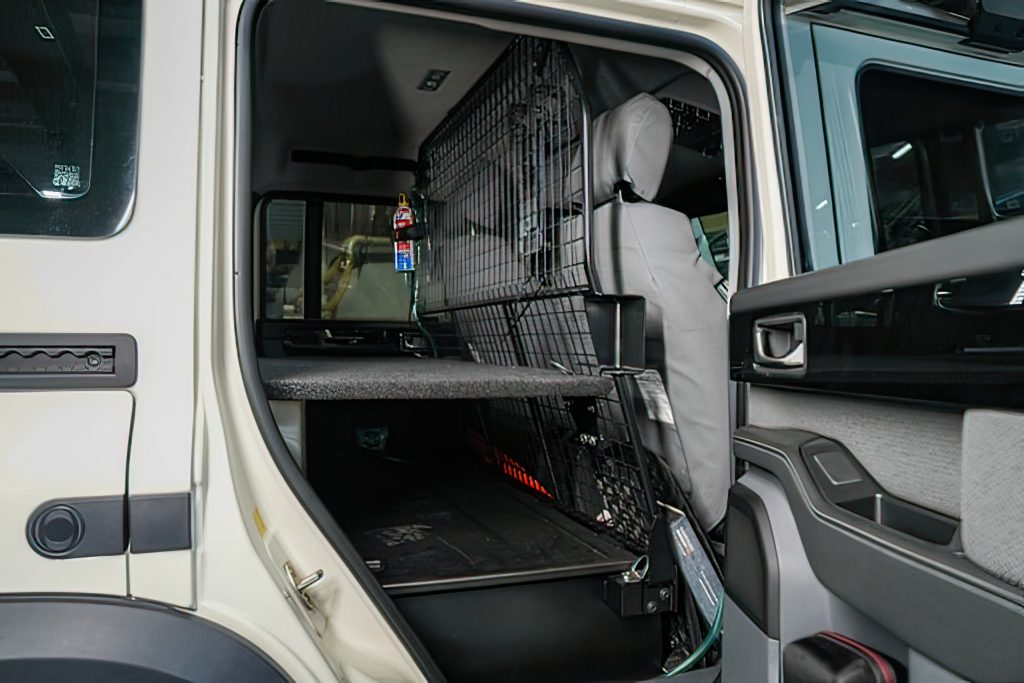
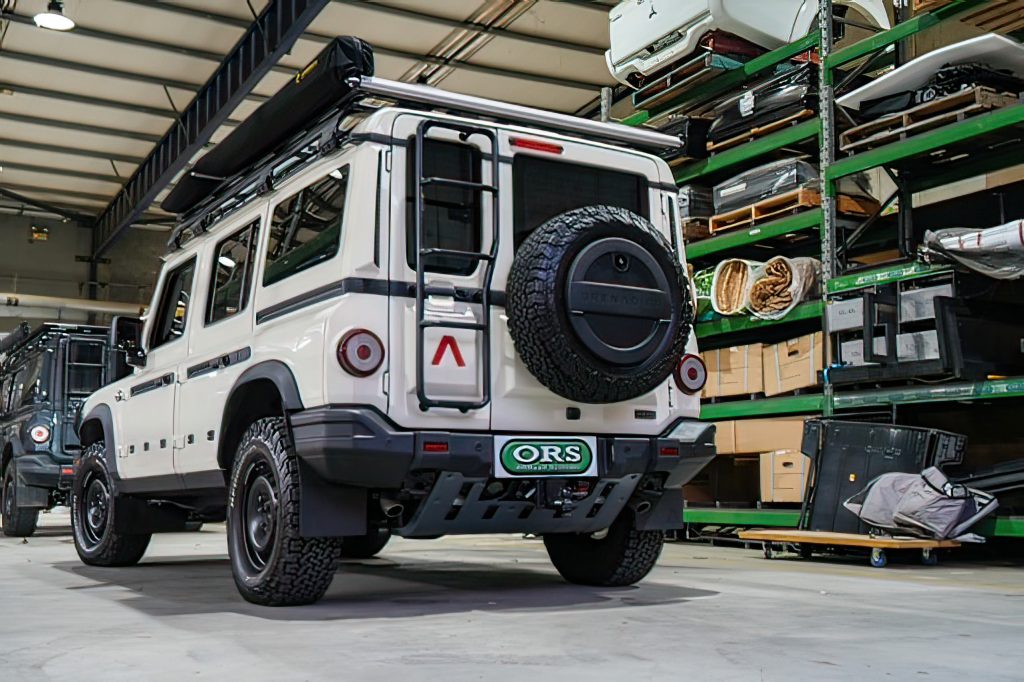
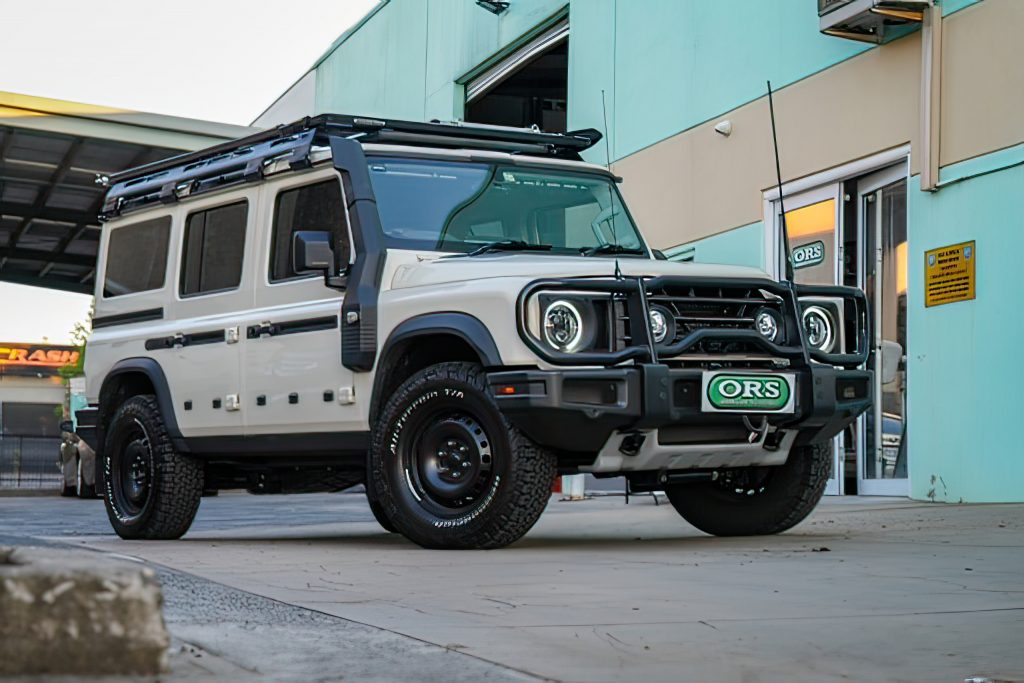
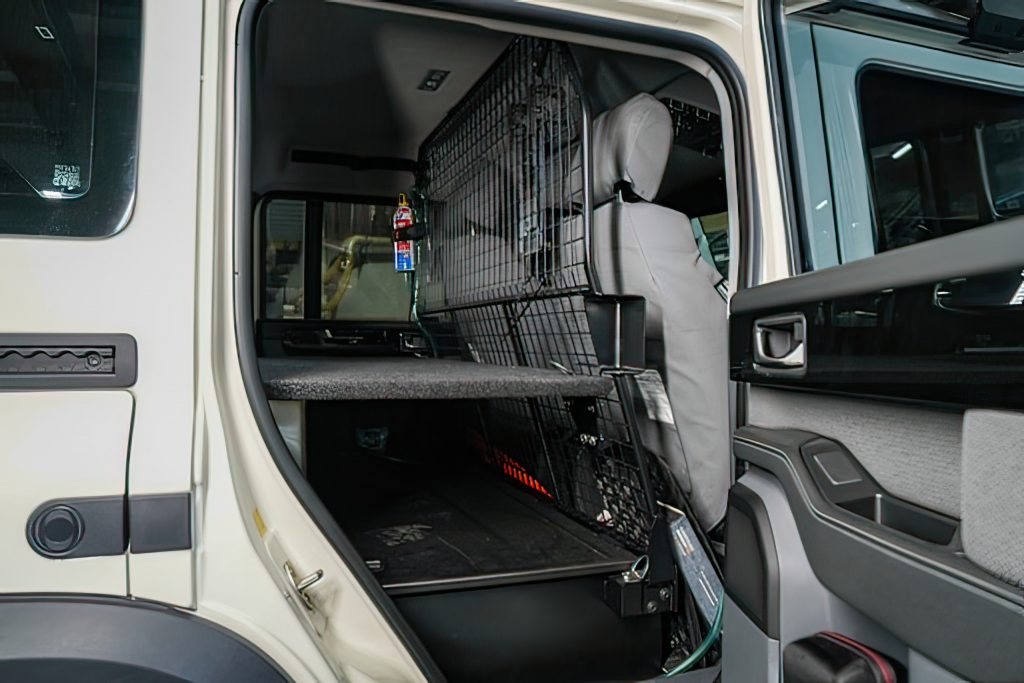
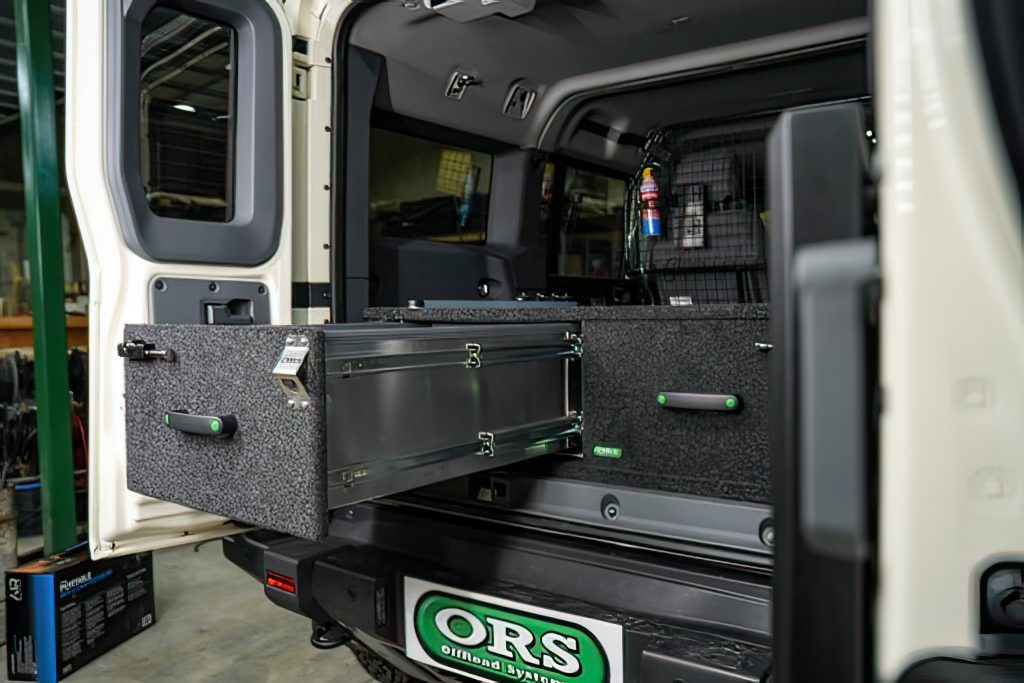
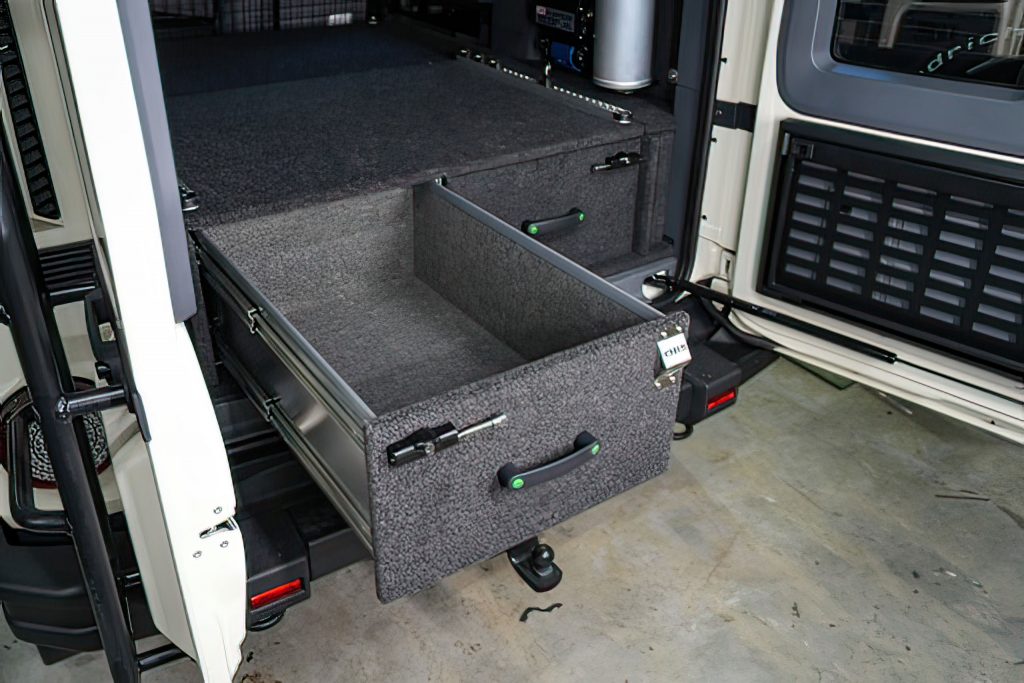
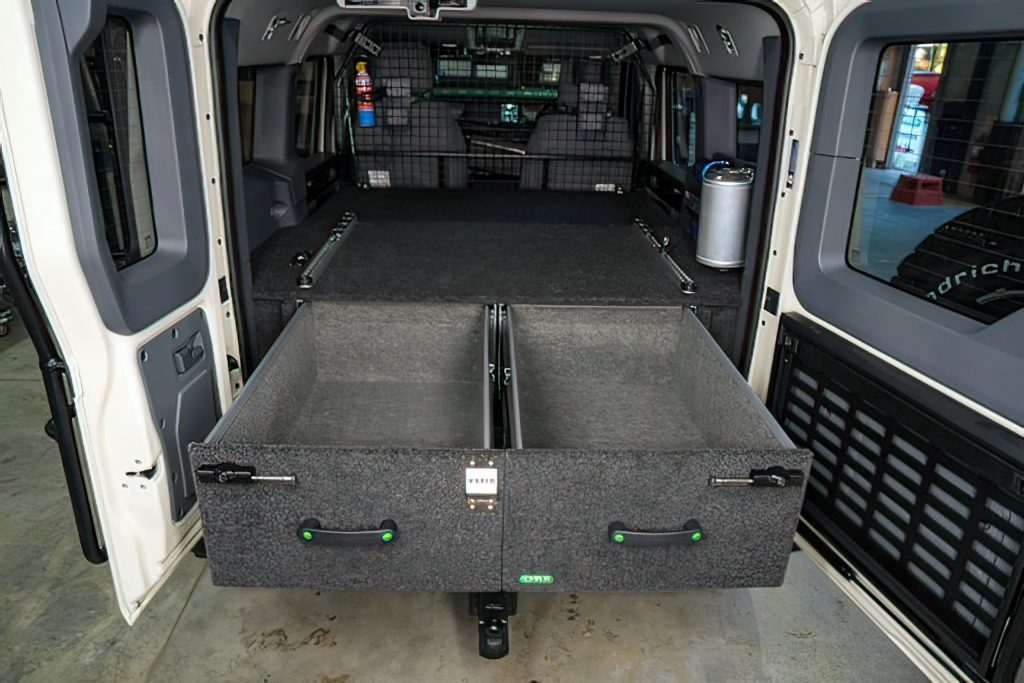
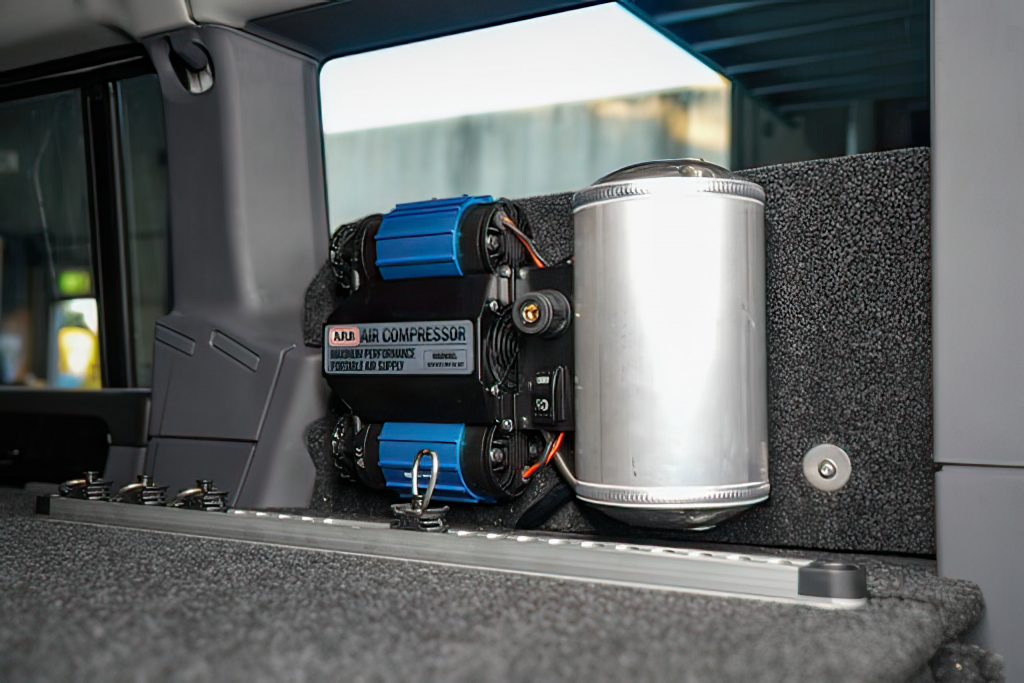
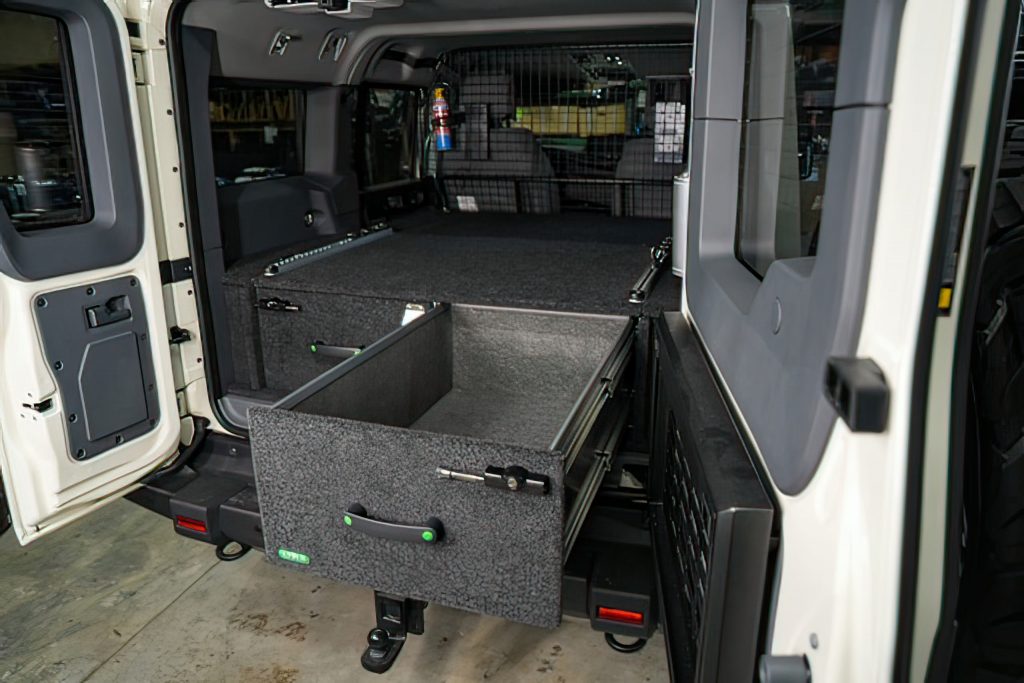
Offroad Systems (ORS) twin drawers, water tank, bed extension and ARB twin compressor are now installed.

The Doc wanted air flow around his compressor, so it was mounted on brackets over the driver’s side rear wheel arch. Trivia: there is a global shortage of twin ARB air compressors due to a surge in demand. ORS sourced the Portable Twin compressor and mounted that to the bracket over the wheel arch. That is why it looks so much like a twin portable compressor – because it is one. The compressor’s power cable was attached to the Grenadier’s spare stud on the 5 stud busbar (the supplied cable was not long enough to reach the spare on the 7 stud busbar). I sourced an 80 amp ZCase fuse, as the ARB has twin 40 amp MAXI blade fuses. The Sparky cut off the two MAXI fuses and ran the cables straight to the80 amp ZCase fuse.

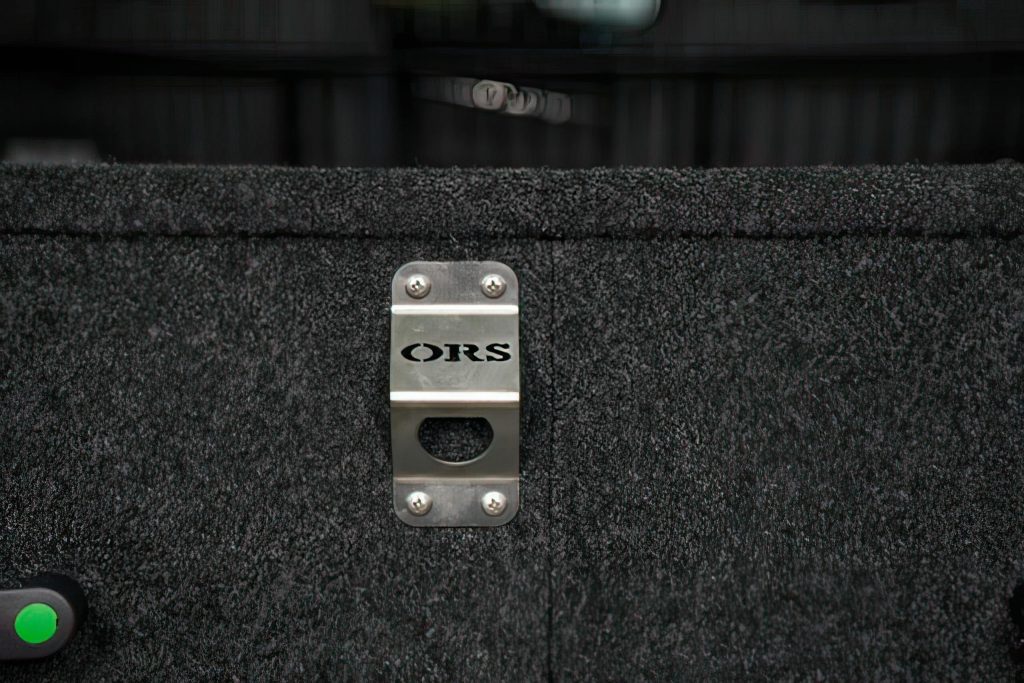
Globalgregors inspired The Doc to add the bottle top opener on the drawers and go for a deeper drawer than originally planned, after he saw their finished setup.

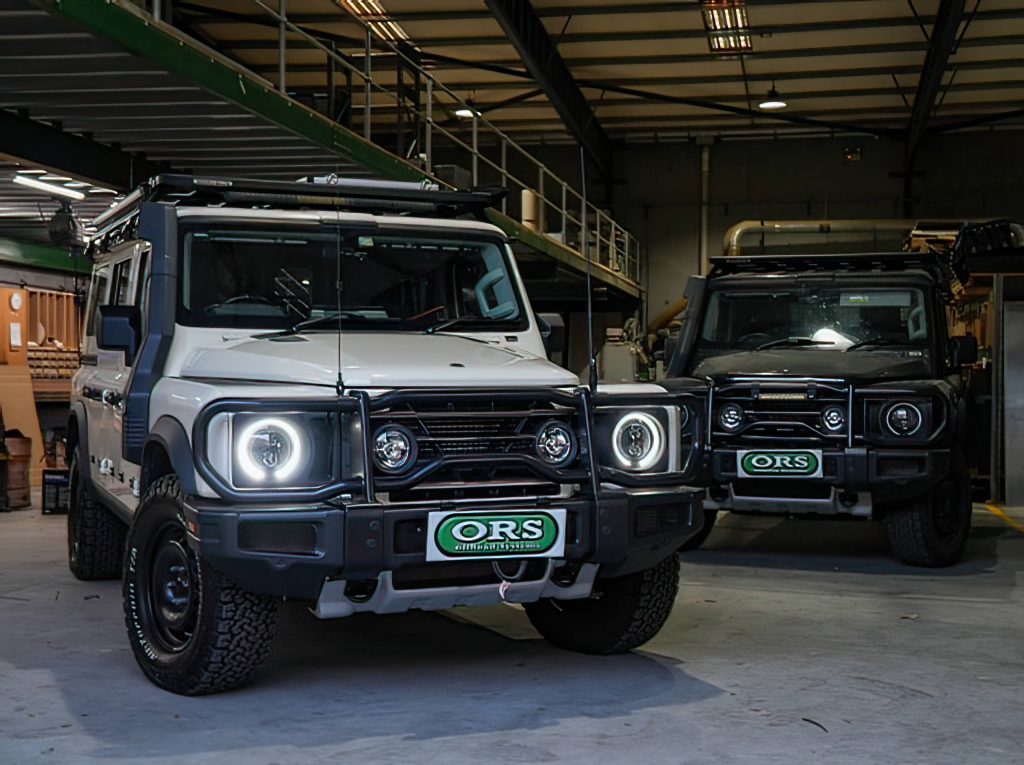
There was another INEOS in simultaneously getting work down, and ORS asked if they could keep The Doc’s car an extra day and have their Pro Photographer take pictures of both (see some of those images below).

The rear roof shelf has been installed and will be covered in the next update.

Grenadier build – drawers, wind and water

Images from the Offroad Systems fitout. Description of the fitout here.

Grenadier build – Nakatanenga stuff

The Doc’s Grenadier build continues. The Doc installed the Nakatanenga Sun Visor Organiser today on the passenger’s side visor. He was running out of room in the lockable centre console. He also bought an emergency mirror that he mounted on the organiser killing two birds with one stone – a vanity mirror on the passenger’s side and an emergency mirror if needed. The mirror is visible when the visor is down. Image from Nakatanenga website.

The Doc also installed the Nakatanenga rear Door Air Vents on both sides. Driver’s side shown here (RHD car). As he will sleep in the car, The Doc needed air circulation throughout the night. Previously he used a window sock and put down the window. This is a better solution.

ORS rear drawers, water tank, bed extension and dual ARB air compressor go into the car over the next 2 days.